
INSIDE BOOK TWO
NEON: The Wonder Beasts of Saint Virel
Book 2
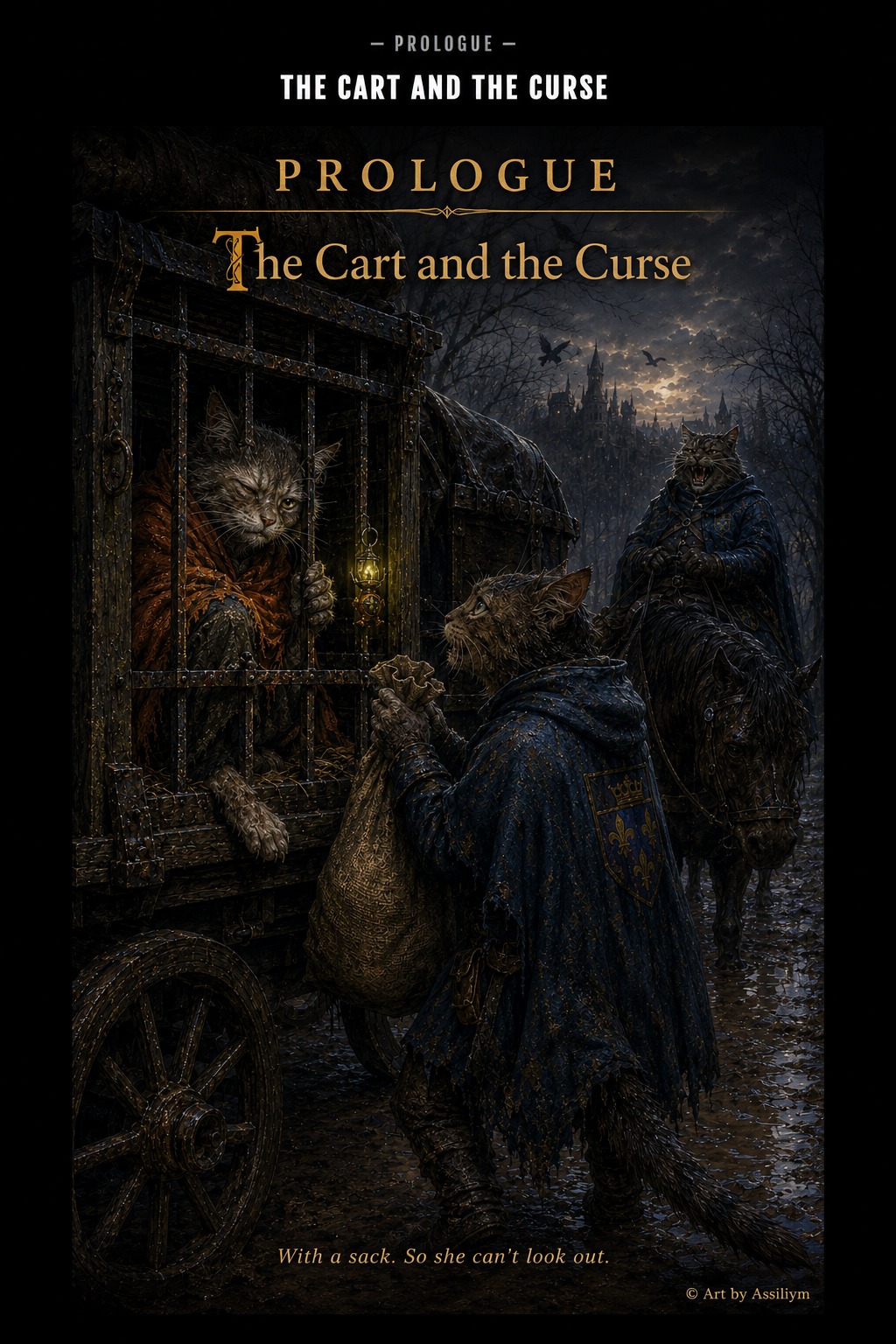
The cart left Paris under a sky the colour of old pewter.
No trumpet announced it. No guard rode before it with a banner. It was not an honourable convoy, and so it had the look of all things governments wish simultaneously to deny and complete: a plain wagon, two royal guards in blue cloaks darkened by road-damp, a driver with no curiosity left in him, and in the back, lashed and iron-bound, a cage too small for dignity and too public for kindness.
Mother Saffron lay within it on her side like a creature packed by enemies who had not troubled to consider the fact of her bones.
The cage was made for transport, not habitation. That was to say, it was made by practical cruelty. Its bars were close enough to deny comfort and wide enough to permit weather. One of her knees had nowhere to go and pressed awkwardly through the gap. One grey foot, bony and naked to the cold, jutted half beyond the iron where the road dust and slush had marked it brown. Her shawl, once orange enough to have earned her names among villagers and fools alike, had dulled into something between rust and old marsh reed. Yet the eyes beneath her matted brows remained living things—grey, sharp, and full of that intolerable amusement which authority least enjoys in its prisoners.
A beetle, black as a spilled ink-drop, crawled along the lower bar of the cage and stopped beside her protruding foot. It should have fallen. The wheel struck a rut; the cart lurched; the beetle did not move. Mother Saffron watched it for a moment with one half-open eye.
“You too?” she muttered.
The beetle opened its tiny wing-cases, showed a thread of green-gold light, then closed them again. A beetle-lamp creature, gone astray from some village hedge or poor cat’s lantern. It clung there stubbornly, absurdly, as if even insects knew that old women in cages ought not to travel entirely alone.
She had not hated her.
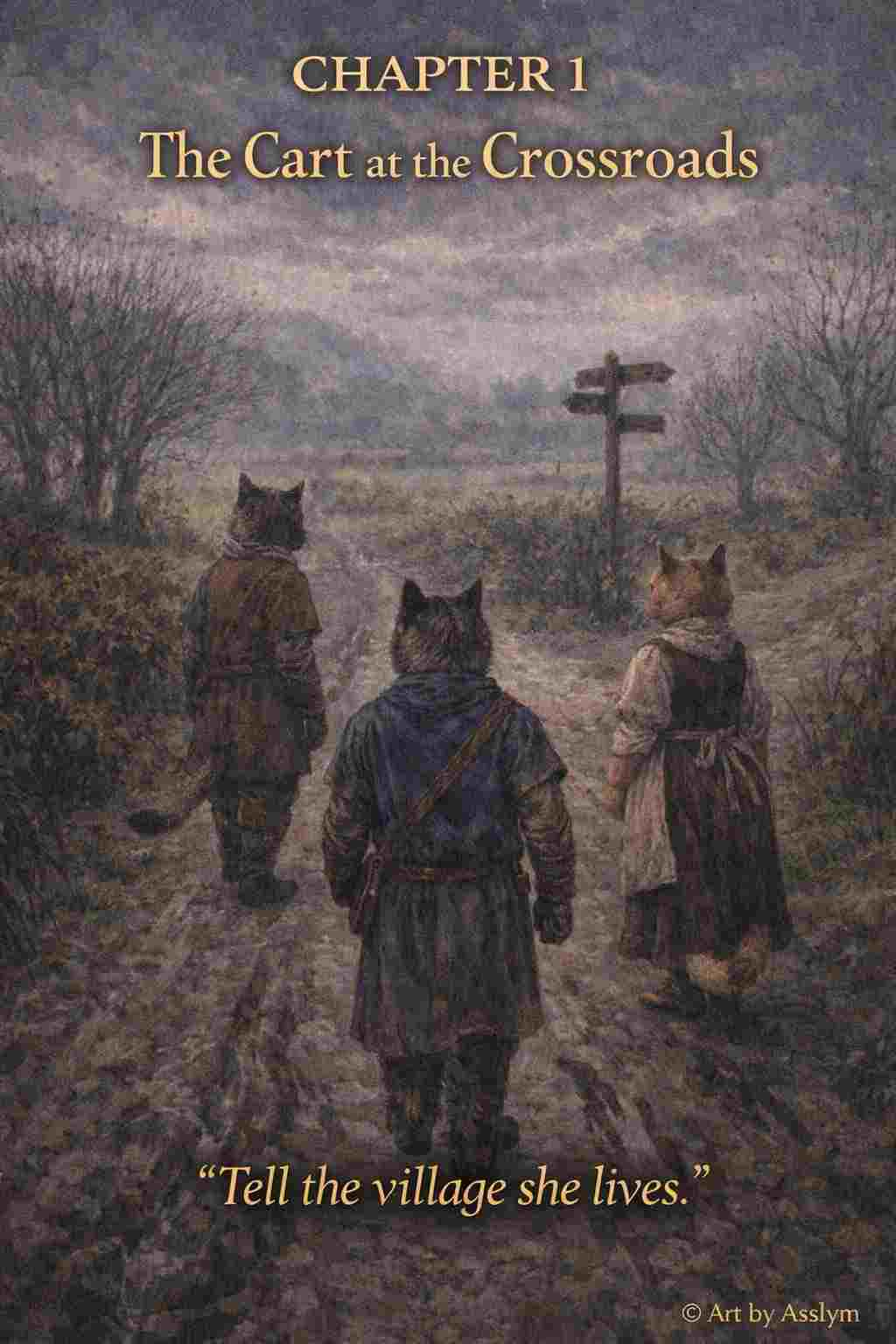
The road bent toward a crossroads marked by an old stone post and a dead elm that had been dead for so long it had entered local geography and become less a tree than a stubborn agreement between memory and wood.
A torn strip of prayer-cloth had been tied to one branch, rain-dark and spring-frayed. Beneath it, some bored traveller had scratched a little wheel-shape into the stone post: circle inside circle, rough teeth around the edge. It was not old enough to be holy and not neat enough to be learned. Joric saw it and looked away. Since Paris, he disliked signs that looked as if they knew more than he did.
It was there they saw the cart.
Not a farm cart.
Not a merchant’s.
A metal prison cart painted in the king’s tired blue, iron-ribbed, with a grated hatch and wheels heavier than dignity required. Two blue guards stood with it in the road, one smoking something sour and the other adjusting his belt with the bored look of a cat performing state business too small for ambition and too official for honesty.
The cart seemed to make the crossroads colder without changing the weather. Mud clung to its wheels in black cakes. The royal paint had been rubbed raw at the corners, and yet the blue remained somehow official, somehow accusing, as if even chipped paint could still carry law. Around the axle, the iron gave off a faint smell of rain, rust, and old keys.
Toma stopped.
Joric’s wife stopped with him.
Joric did too, though he looked as if instinct urged him first to duck into a hedge and then, failing that, to become one.
The guard with the belt saw them, straightened lazily, and said, “You three.”
No title.
No courtesy.
Just that.
Toma did not move forward at once.
“We’re going home.”
“Yes,” said the guard. “You are.”
The other one rapped twice on the side of the metal cart with his knuckles and gave a grin too thin to be called friendly.
“Open it.”
The first guard unlatched the rear hatch.
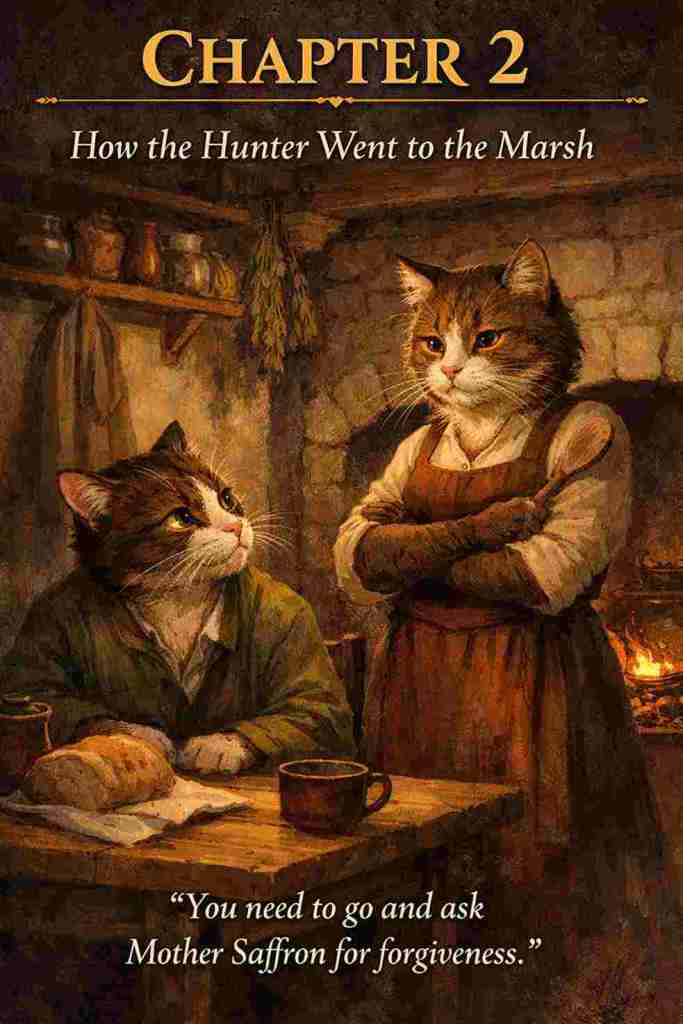
Mariette, who had waited all afternoon with the composure of a cat sharpening judgement on silence, allowed him just enough time to wash his paws, sit badly, and begin pretending hunger before she put down the wooden spoon and said, with dreadful calm:
“You need to go and ask Mother Saffron for forgiveness.”
Joric looked up as though she had suggested he swim to the moon.
“Have you gone mad?”
He spat the words into the room and then, because courage is always easier in kitchens than in marshes, added with a little more force than wisdom advised, “I can’t do that.”
Mariette folded her forelegs.
“And why is that?”
Joric opened his mouth at once and then did not know how to finish.
Because what was he to say now? That he feared her? That he had lied about her? That the old stories he had used as weapons had become, by repeated use, partly real to his own foolish mind? The word witch rose first. He swallowed it. After Paris, after the cage, after the square, after seeing her step down from the blue cart and look at him with that one tired, unanswerable glance, even he no longer had the full stomach to say it aloud in his own house.
“She…” He rubbed one paw against the table edge. “She has powers.”
His heart sank lower and lower in him until it seemed to be walking somewhere around his knees, protesting every step.
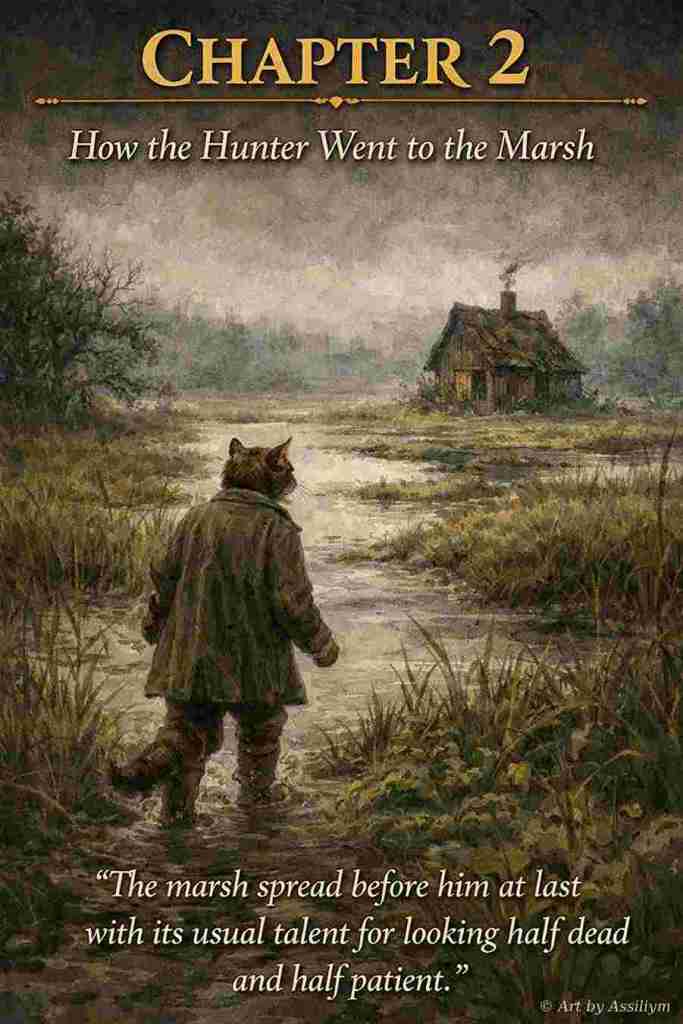
The marsh spread before him at last with its usual talent for looking half dead and half patient. Black water lay under skins of green moss. Reeds leaned in clotted patches. Mud showed itself where it pleased and concealed itself where it would do the greatest insult. Trees stood bent and sparse at the edges as if they had once attempted to leave and found the place unwilling to surrender them entirely.
Spring had touched the marsh without taming it. Marsh-thyme put out tiny purple sparks among the roots. Bitter grass rose in thin blades from the black water. Glass-sedge frogs clicked from hidden places, one note each, as though counting him and disapproving of the total. Lantern-newts clung to the underside of slick stones, their pale bellies glowing like drowned candle-flames. A copper-bill rail stepped across the mud, looked at Joric, and decided at once that he was not worth alarm.
Farther off, where the black water widened under a roof of willow and leaning alder, a patch of drift-moss trembled though no wind touched it. River-slick fungus shone on a dead stump with an oily green gloss. A drowned salamander slid between two reeds and vanished so completely that Joric wondered whether he had seen it at all.
Why the old cat liked it here, he could not understand.
That, perhaps, was because Mother Saffron did not like it in the way sane cats like houses. She belonged to it differently. As some creatures belong to storms.
The marsh did not welcome her, exactly. Marshes do not welcome. They receive, rot, remember, and return things later in forms no one asked for. But it made room for her. Reeds leaned aside under her basket. Thorn-canes failed to catch her shawl. Sick birds let her near. Beasts with snapped legs went still under her paws, not because pain had left them, but because some older part of them knew she would not waste it.
Joric had called that witchcraft.
 Vuk Stribog